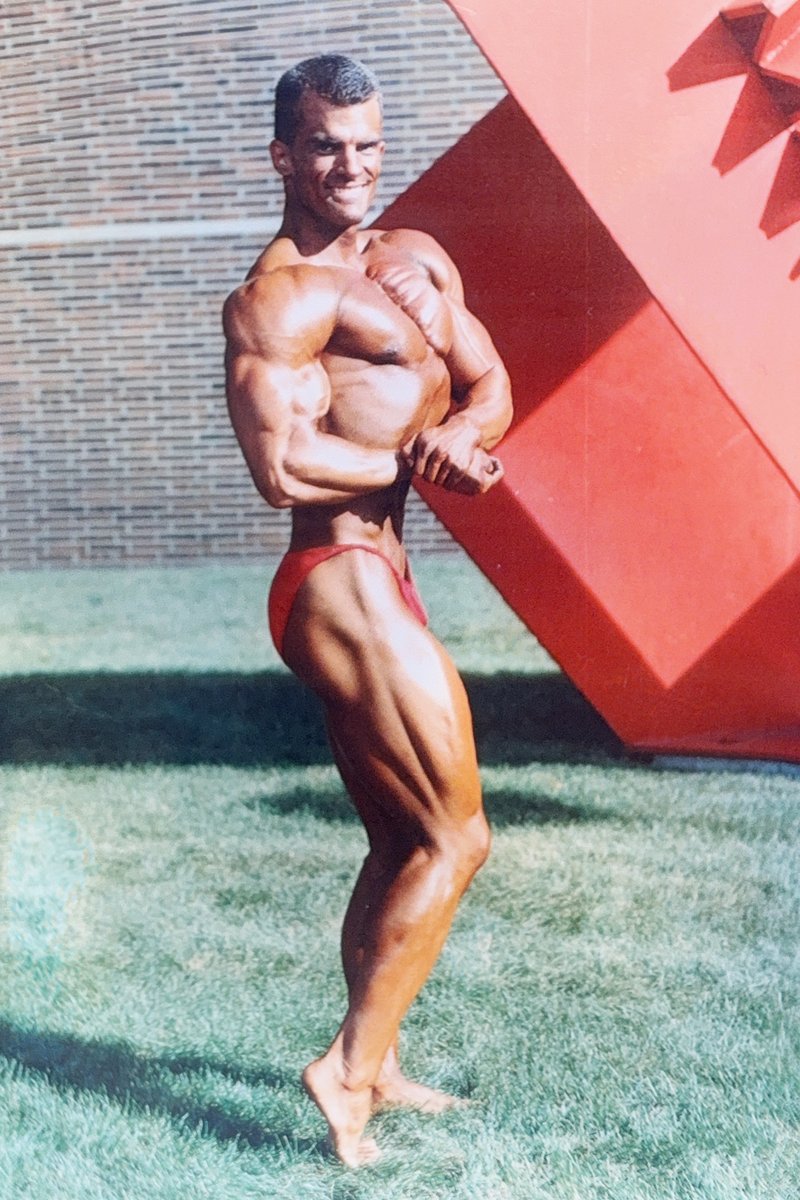
A few weeks ago I posted an old competition prep photo from 2001. It was the same year I was featured in Muscle & Fitness. I didn't think much of it — just an archive shot, the kind I post now and then.
It did over 26,000 views. Thousands of likes. Comments from guys I've never met, asking how, asking what I was doing back then, asking if I could still do it now.
Almost every comment was about the photo. Almost none of them asked the actual question. Not "how did you look like that," but "how does a man keep training — really training, not just showing up — for 35 years without quitting, without getting hurt out of the game, without letting life talk him out of it?" That's the question worth answering. The photo is just the receipt.
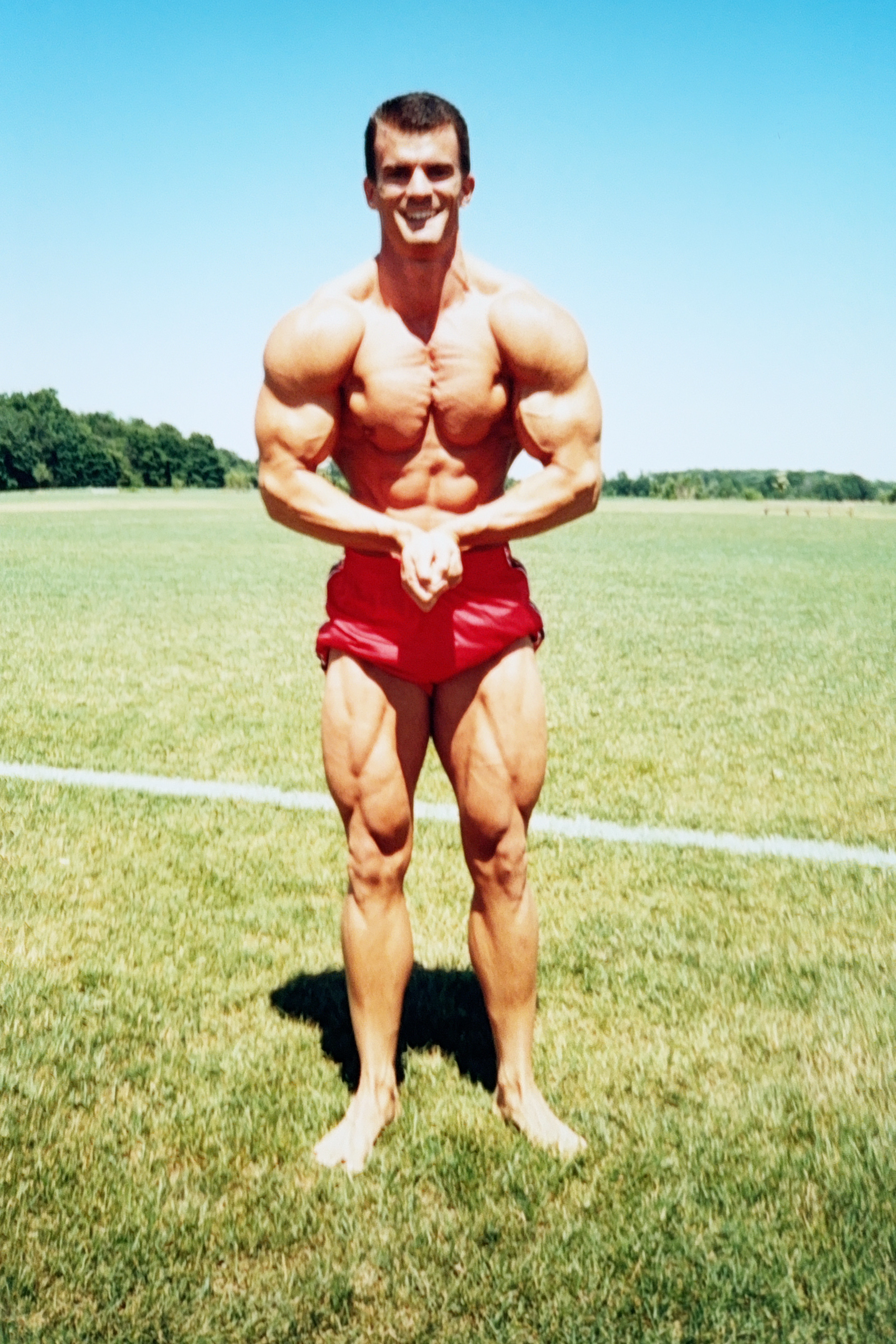
14 Years Old, Long Before Any of It Mattered
I started training at 14. Not because I had a plan, not because anyone told me it would lead anywhere — I just started. Competed for the first time at 17. Won NPC and ANPPC titles between '96 and 2001. Got nationally qualified. Landed in Muscle & Fitness in November of that year.
None of that is the point of this article, and if you take one thing from it, take this: the titles and the magazine feature were never what kept me in this. They were a moment. A good one. But a man who's still training at 49 isn't running on a 25-year-old magazine credit. He's running on something else entirely — and that something else is what nobody asks about in the comments.
The Decline Isn't Dramatic. That's What Makes It Dangerous.
Here's what I've learned watching men my age over three decades — most guys who lose their physique didn't lose it in one bad year. They lost it in a thousand small surrenders that felt harmless at the time. Skipping the gym "just this once." Eating like it's still 25. Telling themselves "I'll get back to it" — and meaning it, every single time they say it.
That's the decline. It's quiet. It doesn't announce itself. By the time it's visible in the mirror, it's already been running for years underneath the surface — energy, hormones, joints, sleep, all eroding slowly enough that you adjust your baseline instead of noticing the drop.
Refusing the decline was never about staying "shredded." It's about refusing to let the small surrenders stack up quietly for years while you tell yourself you'll deal with it eventually. Eventually is where most men's physiques actually go to die.
Longevity Is a Different Sport Than Peak Condition
Competing at 17 to 21 and training seriously at 49 are not the same discipline, even though they use the same barbell. At 20, recovery is nearly free. You can out-train bad decisions. At 49, recovery is the whole game — sleep, joint health, nutrition timing, stress management, all of it starts carrying more weight than the workout itself.
Chris Aceto's fundamentals-first approach to nutrition shaped how I think about all of this early on, and it's held up for a reason: the men who stay in shape for decades aren't the ones chasing the newest protocol. They're the ones who nailed the fundamentals so early that everything else became optimization instead of survival. That's the actual skill — not intensity, but sustainability married to intensity. Almost nobody trains for that on purpose. Most guys train for this month's mirror, not the next 30 years of it.
You Don't Need 35 Years to Start Refusing It
If you're 35+ and you've felt the decline creeping in — not gone, just creeping, that quiet erosion that hasn't fully shown up in the mirror yet but you can feel in your energy and your joints and how your clothes fit — you're not behind. You're at the exact point where the small surrenders either start stacking against you for another decade, or they stop.
You don't need three and a half decades of trial and error to figure out what actually works for a body your age. That's the entire reason I built what I built — so a man doesn't have to spend years rediscovering what I already know cold. The photo that went viral was 2001. What actually matters is 2026, and whether you refuse the decline starting now or start it later, older, and further behind.
The comments on that photo were kind, and I appreciate every one of them. But the photo was never the point. The point is what it takes to still be standing here, still training, still refusing, 35 years later — and that's not genetics or a magazine feature. It's a decision made daily, for decades, that most men never get shown how to actually make.
You don't have to figure that decision out alone, and you don't need 35 years to start making it correctly.
Refuse The Decline.